Kathleen Gallagher, Business Post | 25 June 2026
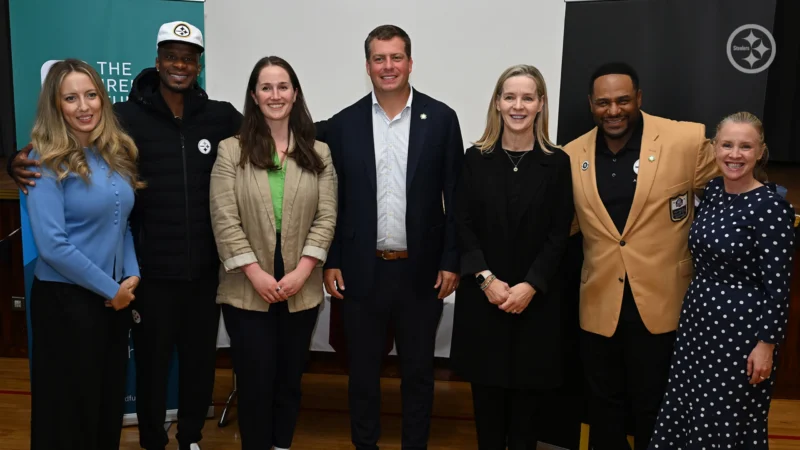
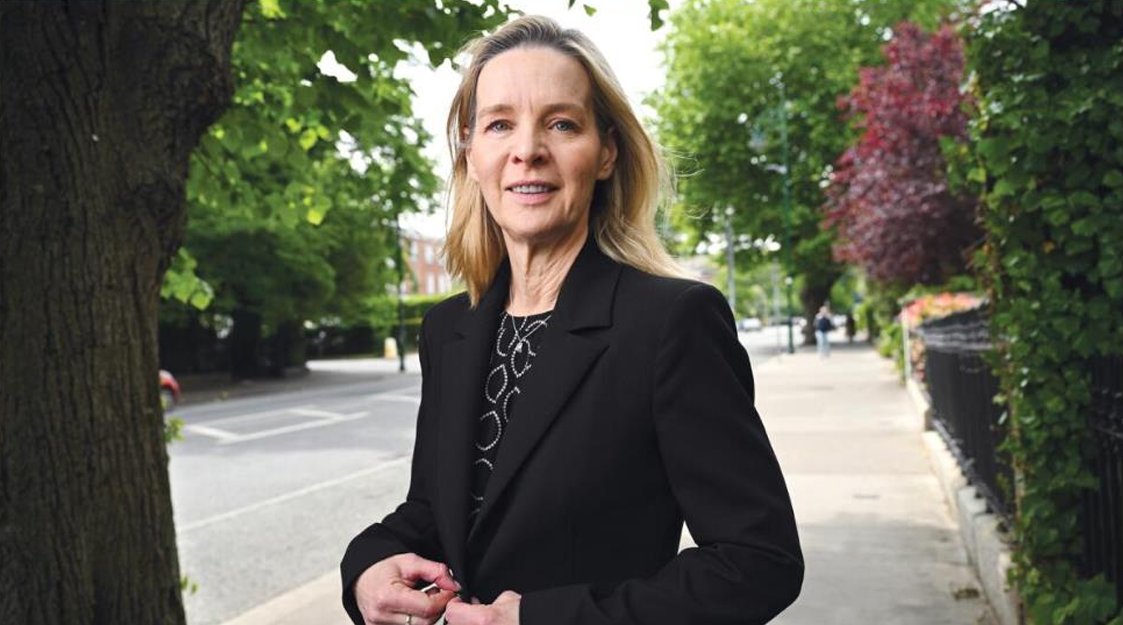
At Dublin Castle on Friday evening Caitriona Fottrell, the president and chief executive of the Ireland Funds, hosted a gala dinner to celebrate the group’s 50th anniversary.
At the event, which was attended by Taoiseach Micheál Martin, and The Edge and Adam Clayton from U2, the global philanthropic network that drives fundraising to Ireland set out a new five-year campaign as it stressed its relevance despite the significant change in circumstances for Ireland.
Fottrell has been with the organisation for almost all her working life, having started straight out of university 30 years ago, is now going to shepherd it through a $200 million (€174.8 million) fundraising target.
“We asked ourselves, what is our ambition for the future? Are we done? That’s a question you always need to ask yourself,” Fottrell says.
“I think we were able to ask and answer that question really quickly. We’re nowhere near done and we do want to be ambitious over the next five years.”
Career
Fottrell is passionate about the Ireland Funds, whose progression and future is intertwined with her own career.
“I’ve been with the Ireland Funds so long, I actually have no other background really to speak of,” she laughs.
Her sparse LinkedIn profile reflects this simply noting that she was vice president prior to leading the organisation in July 2020.
Her connection to the charity, which was launched in 1976 by businessmen Tony O’Reilly and Dan Rooney, began when she did a project on the entity for her MBA at Boston University.
“I met the executive director at the time, Bill McNally. He described what they were doing and I was absolutely captivated by it,” she says. “And anyway, he offered me a job for the summer, an internship, and I’ve stayed ever since.”
Fottrell says every now and then she thinks about going to get experience working somewhere else, but the work she does is “endlessly fascinating”.
“There isn’t a day that goes by that I am not like just completely captivated by a story that comes across the table from an organisation that we funded. Truly not a day,” she says.
She recalls a meeting with a board member who “had a reputation for being really difficult” and preparing for the meeting was “kind of like The Devil Wears Prada”.
“When he walked out he said, ‘you’re so lucky you get to talk about Ireland all day’,” she says.
“And we are… I don’t think we can fully appreciate until we leave the deep, deep affection people have for Ireland.
“Is it perfect? No, of course not. Are there issues? Of course, there are. But there’s something just truly magical about how people feel about Ireland, and that’s always made all of this really, really compelling.”
A changed Ireland
However, Ireland has changed fundamentally since the fund was set up and since Fottrell first started her career there.
In 1976 Ireland was trailing behind many countries within Europe for standards of living. The country had a gross domestic product of $9.45 billion and a GDP per capita of $2,920.
The fund was launched amid the turmoil in Northern Ireland with a goal of using the generosity of the Irish diaspora.
Donors would give money which would fund organisation focused on education, peace and reconciliation, community development and arts and culture.
Now Ireland is a much wealthier country, with GDP of over $700 billion and GDP per capita of just under $130,000. While this is inflated due to the large presence of multinationals, even the more domestic-focused modified gross national income figures paint a positive picture.
For some that would make the argument for charity to the country less necessary.
“Ireland has changed completely,” Fottrell says. “There’s no question that making the case for Ireland today is less obvious than it was 50 years ago.”
Instead, the pitch from Fottrell is that “if you love Ireland and it’s important to you” then this is the fund for you.
Fottrell has seen the evolution of the country through the change in target charities.
When she started a large proportion was going to unemployment contracts, rural resettlement and projects in Northern Ireland but in the last 10 years there has been more of a focus on social issues.
The growing wealth of the country means there are now more Irish donors.
“Previously it was primarily through ancestry, while that is still a big piece, there is a growing cohort of donors that are born, reared and educated in Ireland but are making their life in the US and very connected to home,” she says.
Current make-up
The change in donor base is connected to a change in the way the Ireland Funds collects money.
When Fottrell began the fund was raising $2 million a year all from events.
Big black-tie galas are still a major part of fundraising and the brand. Every year around St Patrick’s Day the organisation hosts a dinner in the National Museum Building in Washington DC.
The dinner, which costs around $1,000 a plate, is attended by the Taoiseach and often Irish celebrities.
However, last year events made up 25 per cent of the $36 million raised.
Around 60 percent came from donor-advised funds, where money is given with a specific target or goal in mind, which the Ireland Funds facilitates.
“Most donors would have a general sense of where they want the money to go to, but we will guide them in terms of finding the sorts of organisations,” Fottrell says.
And this is where a huge piece of work is now happening at the organisation – sourcing of appropriate charities for the funds.
“We had a donor recently looking for something very specific, and it did take us about 11 organisations to go through before we found the one,” she says.
The future of the fund
While the nature of giving has become more complex, Fottrell is keeping things simple at the organisation.
The Ireland Funds may have started with an American fund, but it has expanded to have eight versions across the world including Great Britain, Australia, Canada and Singapore.
However, Fottrell has no plans for future expansion and is also unconcerned that 90 per cent of the money raised is coming from the US.
“The US will be first and most concentrated always,” she says bluntly.
The aim is to raise $50 million a year over the next five years with $50 million of this going into a new endowment fund.
The fund will help future-proof the entity so the charity can continue giving even if donor money slows down or stops in a given year.
“In 10 years’ time, if the world changes completely and events stop, or there’s a massive crash, the Ireland Funds will still be able to do the fundamental grant-making that we do every year,” Fottrell says.